Refrigerant Options in HVAC Systems: A Homeowner's Guide
Your existing system is not suddenly obsolete, but the refrigerant change does shape what you should ask before you repair or replace.
September 30, 2026 · 4 min read
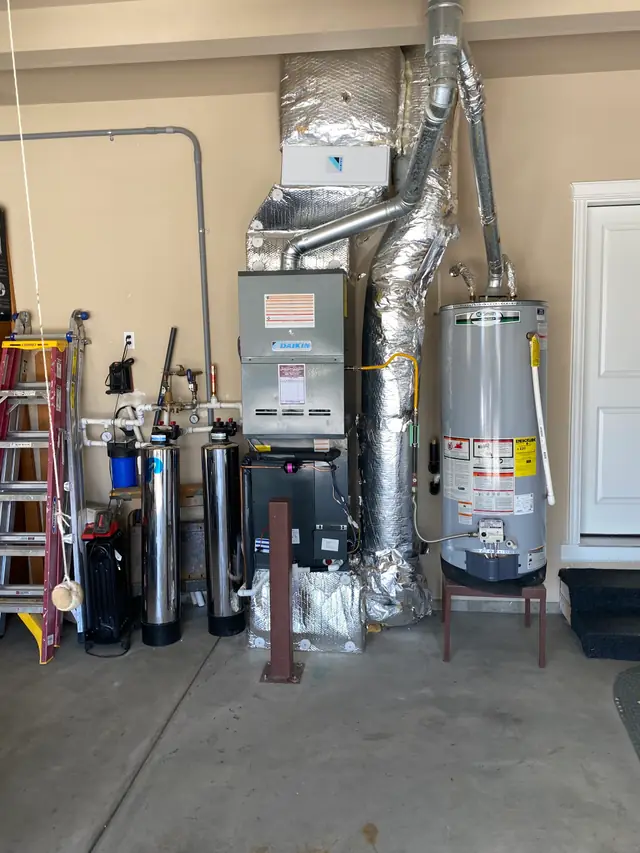
If a technician has mentioned that your system uses R-410A, or you have started pricing a new air conditioner or heat pump, you have probably heard the word refrigerant more this year than in the last twenty. That is not an accident. The industry is changing which refrigerants go into new equipment, and homeowners in Kennewick, Richland and Pasco are starting to ask what that means for the system already sitting in their yard.
The short version: nothing forces you to rip out a working system. But the transition does affect repair and replacement decisions, so it helps to understand the basics before you talk to a contractor.
What refrigerant actually does
Refrigerant is the fluid that carries heat. In cooling mode, it picks up heat from inside your home and carries it outside. On a heat pump in heating mode, it does the reverse. It moves through a sealed loop of copper lines, a compressor and two coils, and in a healthy system it is never used up. Unlike gasoline in a car, it does not burn off. If the level is low, there is a leak somewhere.
That last point matters. Adding refrigerant to a leaking system without finding the leak is like putting air in a punctured tire. It buys some time, and then you are back where you started.
Why R-410A is being phased out of new equipment
R-410A has been the standard in residential air conditioners and heat pumps for many years. Manufacturers are now moving away from it in new equipment, in favor of refrigerants with a lower environmental impact. That is a change to what gets built and installed from here on. It is not an order to pull existing systems out of service, and a system already in your home keeps running on the refrigerant it was built for.
For the current details on timelines and rules, ask the office rather than trusting a forum post. The specifics shift, and we would rather hand you the current answer than a stale one.
R-32 and R-454: the newer options
The two names you will hear most are R-32 and the R-454 family. Both show up in newer equipment designed around them. The rule that matters most: a system is built for one specific refrigerant. You cannot swap a different one into an older system, and you cannot mix them. The oil, the pressures and the components are all matched to what the equipment was designed to use.
The newer refrigerants also come with different handling requirements, which is one more reason the technician's training matters. Jacobs and Rhodes technicians are factory-trained and EPA certified, and the company offers refrigerant transition services for homeowners who want to understand where their system stands.
Repair or replace: a fair way to think about it
There is no single right answer, and anyone who gives you one before looking at your system is guessing. These are the things that actually decide it:
- How old the system is and how well it has been maintained
- How many repairs it has needed in the last few seasons
- Whether the leak can be found and repaired at all
- Whether the problem is a small part or the compressor or coil
- How comfortable the house has been, room to room
- How long you plan to stay in the home
A small repair on a system in good shape is often the sensible move. A coil leak on an older unit that has already had a couple of repairs is a harder call. Ask your technician to explain both paths in plain language and to put the numbers in writing. At Jacobs and Rhodes, no hard sell happens in any of our discussions. You should leave the conversation understanding your options, not feeling steered.
Questions worth asking any contractor
- Which refrigerant does my system use today?
- If it is leaking, can you find the leak, and what does the repair involve?
- If I replace, which refrigerant will the new equipment use?
- Are your technicians certified to handle it?
- Can I see repair and replacement options side by side, in writing?
Financing and rebates
If replacement is on the table, money is usually the next question. Financing is available through Daikin, Lennox and Tri-CU Credit Union, and utility rebates may be available through the City of Richland, Benton REA and Benton PUD. Programs and amounts change, so ask the office what applies to your address before you decide. The installs come with a 100% customer satisfaction guarantee.
Not sure what your system uses? Read the label on the outdoor unit, or call the office at (509) 783-3121 and we will help you sort it out. For a system that has quit after hours, the 24/7 service line is (509) 408-0556.
Jacobs and Rhodes Heating and Air Conditioning, (509) 783-3121
Call (509) 783-3121More articles
What Is a Defrost Cycle, and Is That Steam From My Heat Pump Normal?
If your outdoor unit is smoking on a cold morning, it is probably doing exactly what it was built to do.
Is an HVAC Maintenance Plan Worth It? Cost Versus Benefits
A maintenance plan is not for everyone, but here is how to tell whether it earns its keep in your house.